
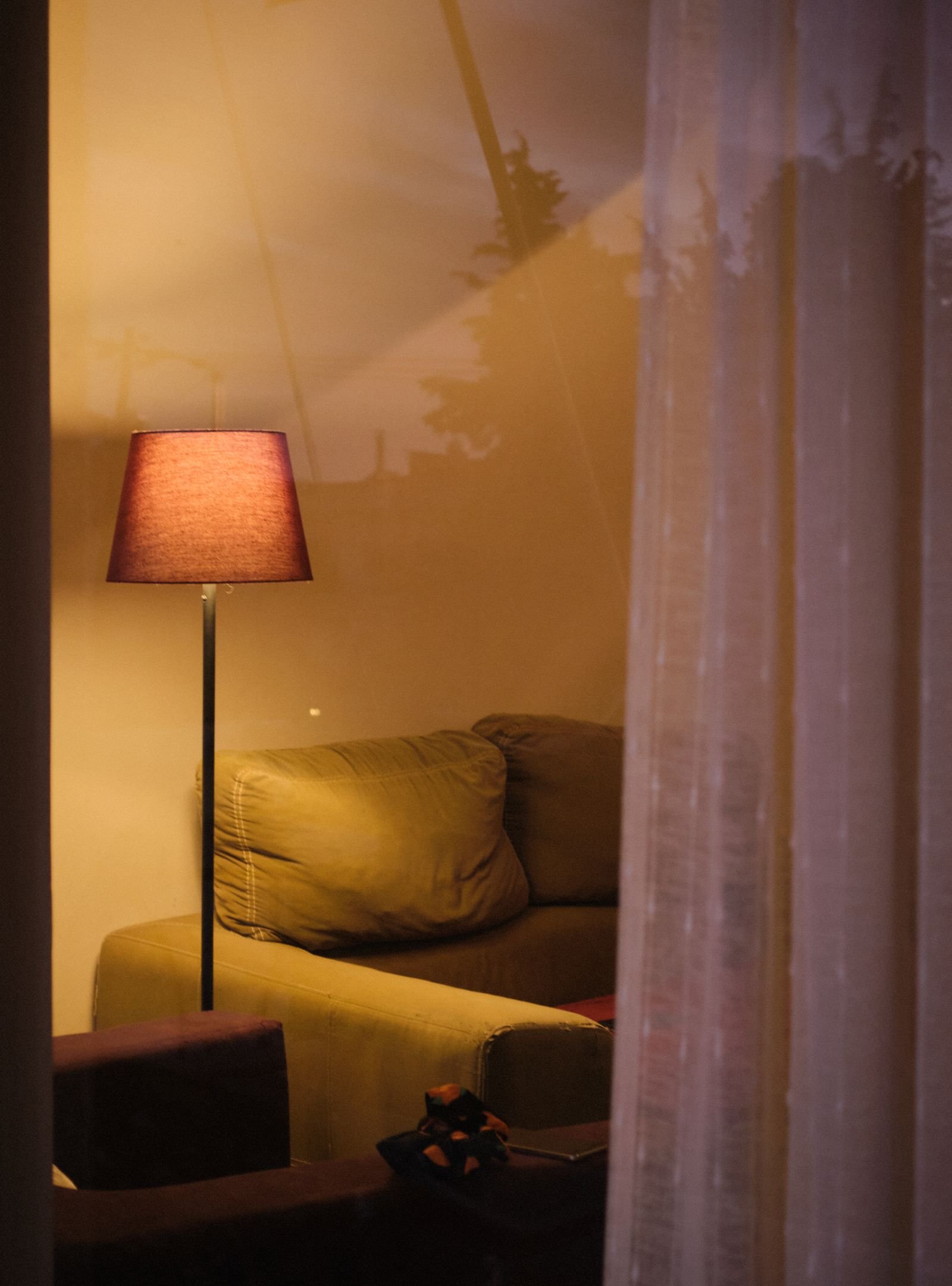

Walk into two living rooms with identical furniture, and one feels warm, calm, and expensive while the other feels flat and a little gloomy. Nine times out of ten, the difference is not the sofa or the paint color. It is the lighting. A living room that relies on a single ceiling bulb will always look tired, no matter how much you spent on the decor. But a room with several light sources working together at different heights instantly feels cozy, intentional, and far more inviting.
The secret is called layered lighting, and it sounds fancier than it is. All it means is combining different types of light, each doing a different job, so the room can adapt to whatever you are doing — morning coffee, an afternoon reading session, a lively evening with friends, or a late movie night. The good news? You do not need an electrician, a big budget, or a renovation to get it right. In this guide, we break down the three layers of light, how to choose the right bulbs, where to place every lamp, and how to fix the most common living room lighting mistakes — on any budget.
Why Layering Light Matters
Most living rooms are lit the way most of us grew up seeing them: one overhead fixture in the middle of the ceiling, controlled by a single switch. That one light has to do everything — fill the whole room, light up the sofa, flatter people’s faces, set the mood. It does all of these jobs badly.
A single overhead source creates harsh downward shadows, makes the corners of the room feel darker by comparison, and flatters absolutely no one. It is also inflexible: you get one brightness and one mood, whether you are working, relaxing, or entertaining.
Layered lighting solves this by splitting the job across several light sources. Each layer has a clear purpose, and because they can be switched on and off independently, the same room can feel completely different at 8 in the morning and 9 at night. Designers also point out a practical benefit: when light comes from several directions and heights, the room simply reads as better decorated. Furniture looks richer, wall color looks truer, and the whole space feels finished. Pairing good lighting with cozy living room ideas on a budget is one of the fastest ways to make a rental or starter home feel like a real home.
The 3 Layers of Living Room Lighting
Every well-lit living room is built from three layers. Think of them as a team: ambient is the foundation, task is the specialist, and accent is the finishing touch. You do not always need all three at full strength, but understanding each one tells you exactly what is missing when a room feels “off.”
Layer 1: Ambient — the foundation
Ambient lighting is the general, all-over light that makes the room visible and usable. It is what you switch on when you walk in. In most living rooms, this comes from ceiling fixtures: a pendant, a chandelier, a flush mount, or recessed lights. But it can also come from tall floor lamps with fabric shades or torchières that bounce light off the ceiling.
A good ambient layer spreads light evenly without creating a harsh bright spot in the middle of the room and darkness everywhere else. A fabric or glass shade that diffuses light works far better than a dark metal shade that traps it. If your ceiling fixture is the room’s only light source, you are missing the other two layers — which is exactly the mistake we will fix later.
Layer 2: Task — the workhorse
Task lighting is focused light aimed at whatever you are actually doing: reading, knitting, working on a laptop, doing a puzzle with the kids. The classic living room task lights are floor lamps with adjustable heads placed beside the sofa or armchair, table lamps on side tables, and swing-arm lamps near a reading corner.
The key difference from ambient light is direction and intent. Task light should fall on the book or the keyboard, not into your eyes. This is why an arc floor lamp that reaches over the sofa, or a lamp with a shaded downward glow next to a reading chair, beats a bright ceiling light every time. Roughly speaking, task lighting accounts for a smaller share of the room’s total brightness than ambient, but it is the layer you will actually notice when it is missing — you will find yourself squinting.
Layer 3: Accent — the mood maker
Accent lighting is the layer that makes a room feel special. It highlights things worth looking at: artwork, a beautiful bookshelf, a plant, an architectural detail like a fireplace or textured wall. It also creates the soft pools of glow that make a room feel cozy after dark.
Accent sources include picture lights over artwork, LED strips behind a TV console or under floating shelves, small table lamps in corners, wall sconces, and even candles or fairy lights for a seasonal touch. A useful rule: accent light should generally be softer than your task lighting, and it works best when you see the glow but not the bare source — a light tucked behind a shelf or a strip hidden under a console looks expensive, while exposed LED dots can look cheap.
Choosing Color Temperature: The Kelvin Guide
Once you have your layers sorted, the next choice is the color of the light itself. Bulb color is measured in Kelvin (K). Lower numbers look warm and golden; higher numbers look cool and bluish. This is separate from brightness — a warm bulb and a cool bulb can give off the exact same amount of light.
Here are the ranges that matter for a living room:
- 2200K–2700K (warm white): golden and cozy, closest to the glow of old incandescent bulbs. This is the sweet spot for living rooms and bedrooms — it flatters skin tones, makes wood look richer, and tells your brain it is time to relax.
- 3000K (soft white): still warm but a touch crisper. A good choice if you want warmth with a little more clarity, for example in a reading area or a living room that doubles as a workspace.
- 3500K–4500K (neutral white): clean and balanced. Better suited to kitchens, bathrooms, and home offices than living rooms.
- 5000K and above (cool white/daylight): bright, crisp, slightly blue. Many people find this harsh indoors. It can make a living room feel like an office or a clinic, so it is best kept out of relaxing spaces.
For a cozy living room, stick with 2700K–3000K across all your fixtures. One of the most common small mistakes is mixing temperatures in a single room — a warm table lamp next to a cool white floor lamp looks uneven and unintentional. When you shop, the box may say “warm white” or “soft white” rather than a Kelvin number; warm white usually means around 2700K. A helpful tip: buy one bulb, try it in the evening, and live with it before replacing every source in the room. Paint color, wood tones, and daylight all change how a bulb looks in your space.
Lumens and Brightness Basics (Without the Headache)
Watts used to tell us how bright a bulb was, because old incandescent bulbs were all the same technology. With LEDs, watts only tell you how much power the bulb uses — brightness is now measured in lumens. More lumens means more light.
You do not need to do math for every lamp, but a few rough guides help. A classic 60-watt incandescent replacement gives off about 800 lumens — a solid middle ground for a main living room fitting. A cozy table lamp can be softer, around 400–600 lumens, while a reading lamp benefits from a bit more punch, around 800–1000 lumens, since the light is focused on a small area.
The most important purchase decision is actually the word “dimmable” on the box. A dimmer lets one light do many jobs: bright for cleaning or a daytime gathering, low and warm for an evening film. Not every LED bulb works with every dimmer, so check compatibility — a dimmable bulb paired with an old non-dimmable dimmer can flicker. For renters, plug-in dimmer switches that sit between the lamp and the wall outlet are a cheap, no-wiring way to add dimming to any floor or table lamp.
Budget Picks and Renter-Friendly Options
Great layered lighting does not require a renovation budget. Some of the most effective accent lighting you can buy costs less than a takeaway dinner. Here is how to build all three layers affordably — and without touching your landlord’s wiring.
Smart buys under a tight budget
- LED strip lights: self-adhesive strips that tuck behind the TV console, under floating shelves, or along the back of a bookshelf. Instant accent lighting for very little money. Choose warm white (2700K–3000K) and dimmable strips with a remote or app control.
- Fairy lights or string lights: draped in a glass vase, along a mantel, or around a window frame, they add a soft, festive glow that is perfect for evenings.
- Plug-in wall sconces: battery-operated or plug-in sconces with a cord cover give you accent light on the wall with zero drilling or wiring — ideal for renters.
- Secondhand lamps: floor and table lamps are some of the best thrift-store finds. A dated lamp body with a new shade (or a can of spray paint) looks brand new. The shade does most of the visual work.
- Smart bulbs: a single smart bulb in an existing lamp lets you change brightness and even color temperature from your phone — a rental-friendly way to make one lamp behave like three.
Start with one layer you are missing, buy the cheapest good option for it, and live with it for a week before adding the next. Layered lighting builds up beautifully in stages, which is exactly the approach behind budget decor with big style on a small spend — a few thoughtful additions beat one expensive purchase.
Renter-friendly rules
If you rent, the golden rule is: no hardwiring, no holes, no problem. Plug-in pendant lights that hang from a ceiling hook, battery-operated picture lights with adhesive mounts, and floor lamps do all the heavy lifting. Use cord covers or cable trunking to hide wires neatly along the wall, and adhesive LED strips come off cleanly when it is time to move out. You can build a fully layered scheme in a rental without your landlord ever knowing.
Room-by-Room Placement Tips
Knowing the layers is only half the battle — placement is where rooms actually transform. Walk through your living room zone by zone.
The sofa area
This is where you will use light the most, so it deserves the most thought. Flank a standard sofa with two table lamps on side tables if space allows — symmetrical pairs look balanced and give even light. If you only have one side table, put a floor lamp on the other side. An arc floor lamp that reaches over the sofa is a brilliant all-rounder: it gives ambient light when tall and shaded, and works as task light when positioned over a seat. For sectionals, place a reading lamp at each end where people actually sit to read.
The reading corner
A dedicated reading spot needs its task layer done properly. Place the lamp beside or slightly behind the chair, on the side of your dominant hand if you read physical books — the light should fall on the page, not across your face. A floor lamp with an adjustable head or a swing-arm wall lamp (plug-in versions exist) is ideal. Keep the bulb warm, around 2700K, and dimmable so a late-night read does not feel like sitting under a spotlight. Pairing a calm reading corner with the gentle, uncluttered feel of warm minimalism keeps the spot serene rather than cluttered.
The TV wall
Watching TV in a pitch-dark room strains your eyes, because the screen is so much brighter than everything around it. The fix is soft bias lighting: an LED strip behind the TV or console, or a small lamp on the media console, glowing at low brightness. This reduces eye strain and makes the picture look better. Keep it dim and warm — you want a gentle halo, not a second screen. Avoid placing any lamp where its reflection shows up on the TV screen.
Artwork and shelves
This is where accent lighting earns its keep. A picture light mounted above a frame, a small spotlight aimed at a gallery wall, or LED strips along the back of bookshelves turns your decor into a feature instead of background. Light your shelves from the top or back rather than the front so the glow washes over the objects instead of glaring at you. If you have one statement piece — a large painting, a mirror, a sculpture — give it its own light and keep the surrounding area dimmer so it stands out.
Lighting for Small Living Rooms
Small living rooms actually benefit the most from layering, because good light makes a compact space feel bigger. The principles are the same, but the execution needs to be space-smart.
- Bounce light upward: torchière floor lamps and uplights bounce light off the ceiling, which makes a low or small room feel taller and more open.
- Light the corners: dark corners shrink a room visually. A small table lamp or a slim floor lamp in a corner “opens up” the space instantly.
- Use mirrors strategically: a mirror opposite or beside a lamp doubles the perceived light without adding another fixture.
- Go slim and wall-mounted: swing-arm wall lamps and slim-profile floor lamps give you task light without eating floor space. Plug-in sconces add accent light with zero footprint.
- Keep temperatures consistent: in a small room, mismatched warm and cool bulbs are extra noticeable. One temperature — 2700K to 3000K — keeps everything cohesive.
Small-space lighting pairs naturally with compact-friendly design choices, and our guide to decor trends for compact homes has more ideas for making every square foot work harder.
Common Lighting Mistakes to Avoid
If your living room still feels wrong after reading this far, one of these culprits is probably to blame:
- The single overhead light: relying on one ceiling fixture is the number one mistake. It creates harsh shadows and leaves corners dark. Add at least two lamps at different heights and the room will transform.
- Harsh cool white bulbs: 5000K “daylight” bulbs in a living room feel clinical and cold. Swap them for 2700K–3000K warm white and notice how the same furniture suddenly looks cozier.
- No dimmers: full brightness all the time is exhausting. Even one dimmer — or a plug-in dimmer on a lamp — gives you evening mode for free.
- Everything on one switch: when all lights turn on together, you lose all flexibility. Lamps on separate plugs or switches let you build different moods.
- Ignoring glare: bare bulbs at eye level, lamps reflected in the TV, or a bright downlight shining straight into the sofa all create glare. Shades, indirect placement, and positioning fix this.
- Forgetting the shade: a great lamp with a stained or wrong-sized shade looks cheap. The shade controls how light spreads — replace it before replacing the lamp.
- Mixing color temperatures: warm and cool bulbs in the same room clash. Pick one temperature for the whole room and stick with it.
Frequently Asked Questions
How many light sources should a living room have?
A good rule of thumb is three to five separate light sources: one ambient (usually a ceiling fixture), one or two task lights (floor or table lamps near seating), and one or two accent lights (a strip, a small lamp, or a picture light). A larger room or an open-plan space may need more; a tiny living room can work beautifully with three well-placed sources. The goal is not a number — it is having light at different heights that you can control separately.
What Kelvin is best for a living room?
For most living rooms, 2700K to 3000K (warm white) is the best choice. It feels cozy and relaxing, flatters skin tones, and makes wood and fabric look rich. If you want a touch more clarity for a reading corner, 3000K is slightly crisper while still feeling warm. Avoid 5000K and above in living rooms — it looks harsh and clinical in a space meant for relaxing.
How can I improve living room lighting on a budget?
Start with the cheapest high-impact changes: swap any cool white bulbs for warm white 2700K LEDs, add a dimmable LED strip behind the TV console or bookshelf for accent light, and pick up a secondhand floor lamp for a dark corner. A new lampshade on an existing lamp and fairy lights in a glass jar can each transform a corner for very little money. Build the layers one at a time instead of trying to buy everything at once.
Are floor lamps enough without ceiling lights?
Yes, in many cases. A tall torchière or arc floor lamp can provide perfectly good ambient light by bouncing light off the ceiling, and a second floor lamp or table lamp adds the task layer. Many renters and people with low ceilings skip ceiling fixtures entirely and light the whole room with two to three well-placed lamps. The key is having more than one source and placing them at different heights.
How do I make lighting dimmable in a rental?
You have several no-wiring options. The easiest is a plug-in dimmer switch that sits between the lamp and the wall outlet — it works with any dimmable LED bulb. Smart bulbs are another great option: they dim from a phone app or voice assistant with no new hardware at all. Just make sure the bulb is labeled “dimmable,” since not all LEDs work with dimmers, and pair it with a compatible dimmer to avoid flickering.
Paste your AdSense code in Ad Inserter Block 3