

Most UK homes do not have a dining room. They have a corner of the kitchen, the end of the living room, or a 2-metre stretch of wall in a Victorian terrace that has to feed four people and then disappear again. A dining area in a small home is a geometry problem before it is a decorating one: the table has to fit, the chairs have to pull out, and someone still has to walk past with a plate.
The good news is that small dining spaces are easier than big ones once the sizes are right. A 120-centimetre round table seats four comfortably and needs less floor than a rectangular table for the same number of people. Get the table, the clearance and the light right, and the corner stops being wasted space.
1. Go round — a 120cm table seats four in less space
A round table has no corners to walk into and no “head of the table” hierarchy, which suits a small room. A 120cm round table seats four; a 90cm round seats two comfortably and four at a push. Prices run £150 to £400 for a solid wood or oak-effect round table, less for a second-hand one.
A pedestal base is worth paying for in a small room: four legs eat into legroom and make the fourth chair awkward, while a central base leaves everyone’s knees free. Allow 75cm of clearance behind each chair so people can pull out and stand up without hitting the wall.
2. Banquette seating along the wall
The single best space-saver for a small UK dining area is a bench along the wall — banquette seating. A bench takes up 45cm of depth against the wall, seats two or three people, and removes the need for clearance behind chairs on that side entirely. Under-seat storage is a bonus: lift-up lids hide tablecloths, board games and the Christmas crackers.
A ready-made upholstered bench costs £120 to £300; a carpenter-built banquette with storage runs £400 to £900 fitted. Our banquette seating ideas for small UK kitchens cover fabrics, depths and layouts in detail — if the dining area is in the kitchen, start there.
3. Use the alcove — the chimney breast gives you a nook for free
Victorian terraces and 1930s semis are full of alcoves, those 60 to 90cm deep recesses beside the chimney breast. A small table pushed into an alcove, with a bench on the wall side and two chairs on the room side, creates a dining nook that uses dead space and leaves the rest of the room clear.
Add a wall light or a small pendant in the alcove so the nook does not feel like a cupboard, and a shelf above the bench for plants or crockery. The whole nook can be built around a £40 floating shelf and a £25 cushion made to measure.
4. An extendable table for the days you need six seats
If you host Sunday lunch or Christmas dinner, an extendable table is the honest answer: 120cm for everyday use, extending to 160 or 180cm when the family comes. Butterfly-leaf tables (the leaf folds inside) cost £200 to £500 and need no storage space for spare leaves.
Measure the extended length against the room before buying. You need 75cm clear behind the chairs at full extension, or the extra guests will be eating with their backs against the wall.
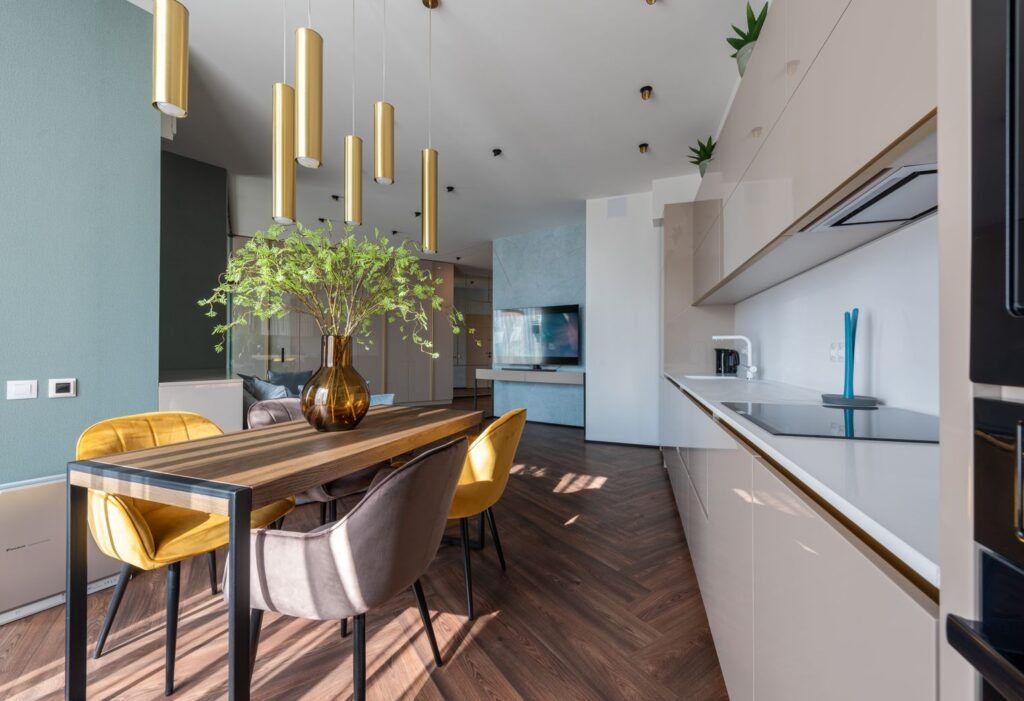
5. Hang the light low — 75cm above the table
A dining pendant hung 75cm above the tabletop makes even a small table feel like a destination. It pools light on the plates, flatters faces and marks the dining zone in an open-plan room. A dimmable pendant costs £30 to £80; a dimmer switch is another £15 if the circuit allows it.
Use a warm bulb (2700K) and a shade that directs light downwards. A bare bulb at ceiling height in a dining corner just lights the ceiling and leaves the table in shadow.
6. A mirror and pale walls make the corner bigger
Dark walls suit a moody living room, but a dining corner needs light. Keep the walls around the table pale — warm white, pale sage or soft grey — and hang a mirror on the wall beside the table to bounce the window light across it. A 60 by 90cm mirror is enough; bigger is better if the wall allows.
A light-coloured rug under the table defines the dining zone, but it must be big enough for the chairs: add 60cm to the table’s footprint on every side so chair legs stay on the rug when pulled out. A washable rug is the only sensible choice under a dining table.
7. Storage that is 40cm deep or less
A sideboard is the classic dining storage, but a standard 50cm-deep sideboard swallows a small room. Look for a 35 to 40cm-deep sideboard (£150 to £400) or a wall-mounted cabinet instead. Floating shelves above the bench hold glasses and plants without touching the floor at all.
Keep the everyday items — placemats, napkins, the tablecloth — in the bench or sideboard, and the rarely used items (the big serving dishes, the table leaves) somewhere else entirely. A dining area that stores everything becomes a cupboard you eat in.
8. Dress the table, then stop
A small dining table looks best with one centrepiece, not five: a jug of eucalyptus, a bowl of lemons, or a candle in a hurricane glass. Change it with the season — a small vase of branches in winter, a bowl of fruit in summer — and leave the rest of the table clear. A table that is always half-dressed never looks ready to eat at.
For Christmas, a small table needs even less: a simple runner, four candles and the crackers. Our small flat Christmas tree ideas cover the festive side of a small home, including how to fit a tree and a dining table in the same room.
9. Renter-friendly dining
Renters cannot build a banquette or chase a pendant into the ceiling, but the rest works: a round table, a leaning ladder shelf (£30 to £60) for storage, a plug-in wall light or a battery picture light over the table, and a washable rug. A tablecloth in a good colour does more for a tired table than a new table does, and it costs £15 to £30. See our guide to decorating a rented flat without damage for the full damage-free approach.
What it costs
- Table-only refresh (round table, 4 chairs, pendant): £250 to £600.
- Banquette nook (bench, cushions, shelf, light): £200 to £500 ready-made; £500 to £1,000 built-in.
- Full small dining makeover (table, seating, storage, lighting, rug): £600 to £1,200, one to two weekends.
Mistakes to avoid
- A rectangular table that is too long for the room. If chairs cannot pull out 75cm, the table is too big, however pretty it is.
- A chandelier or pendant hung too high. Above 90cm over the table it lights the ceiling; 75cm is the number.
- A rug that is too small. Chair legs half on, half off the rug will wobble and fray the edge within weeks.
- Storing everything in the dining area. If the sideboard holds the ironing board and the toolbox, it is not dining storage.
FAQ
What size dining table fits a small UK home?
A 120cm round table seats four and fits most terrace kitchen-diners; a 90cm round seats two to four in a flat. Allow 75cm behind every chair for pulling out, and 60cm of table edge per person.
Is a round or rectangular table better for a small dining room?
Round, almost always. No corners to bump into, no wasted head-of-table space, and four people fit around 120cm where a rectangular table needs about 140cm for the same four.
How do I fit a dining table in a small flat?
Use the wall: a bench on one side removes chair clearance, an extendable table covers guests, and a drop-leaf or fold-down table (£80 to £200) works in the smallest kitchens. A 90cm round table fits in most alcoves.
What is the best lighting for a small dining area?
One dimmable pendant, hung 75cm above the table, with a warm 2700K bulb. It defines the dining zone in an open-plan room and makes the table usable in the evening.
Checklist
- ☐ Measure the space: table size + 75cm clearance behind chairs
- ☐ Choose round 120cm (4 people) or 90cm (2–4 people); pedestal base if possible
- ☐ Bench or banquette on the wall side to save space
- ☐ Check the alcove: 60–90cm deep is a ready-made nook
- ☐ Extendable table if you host (120cm → 160/180cm)
- ☐ Pendant 75cm above the table, dimmable, warm 2700K bulb
- ☐ Mirror 60 x 90cm or bigger beside the table
- ☐ Storage 40cm deep or less; floating shelves above the bench
- ☐ Washable rug, table footprint + 60cm on every side
- ☐ One centrepiece only; change it with the season
Further reading
- How to Decorate a Rented Flat Without Damage: A UK Renter’s Guide
- Small Flat Christmas Tree Ideas for Homes With No Space
- Indoor Plants for Low-Light Homes: Biophilic Ideas That Survive Dark Corners
Paste your AdSense code in Ad Inserter Block 3