
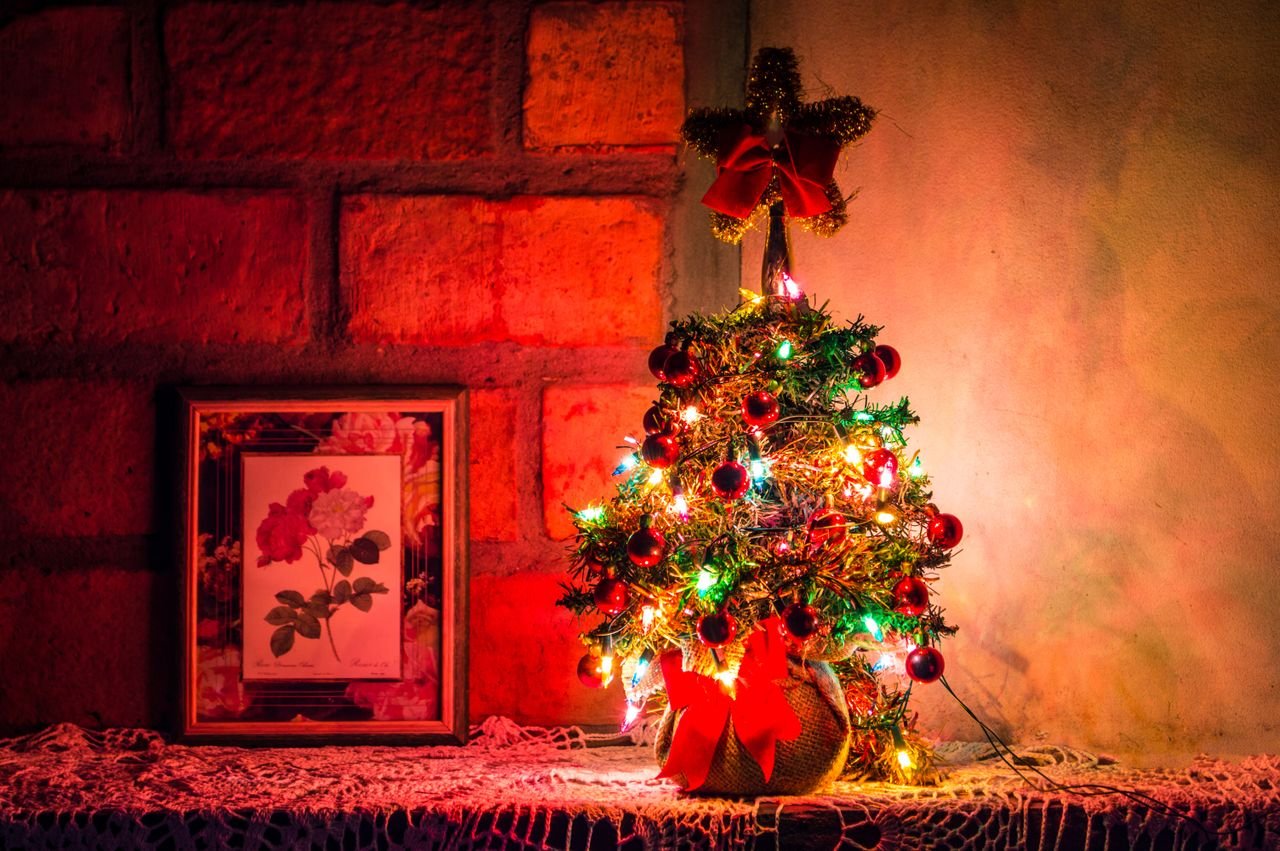

A small living room does not need a six-foot tree, three garlands and a mantel full of ornaments to feel properly Christmassy. In fact, in a typical UK flat or Victorian terrace front room — often just 12 to 15 square metres — restraint is what makes the room feel cosy rather than cramped. The trick is to choose a few warm, high-impact touches, keep the floor clear, and let light and texture do most of the work.
These ideas are built for real small homes: rented flats, terraced houses with a chimney breast and alcoves, and new-build living rooms where the sofa already takes up half the wall. Most cost under £50, and none of them needs drilling, permanent fixings or a storage unit in January.
1. Start with one slim tree, not a wide one
The single biggest space-saver is the shape of the tree. A slim or pencil tree is typically 25 to 35 centimetres wide at the base, compared with 90 to 110 centimetres for a standard artificial tree. That difference alone frees up roughly a square metre of floor — in a small room, that is the difference between a walkway and an obstacle course.
A 150-centimetre slim tree suits ceilings of 2.4 metres, the standard in most UK flats, and costs £30 to £60. Put it in a corner, ideally beside the chimney breast or in an alcove, where it reads as part of the architecture rather than something parked in the middle of the room. If even that feels too much, a half-wall tree — flat-backed, designed to sit flush against a wall — takes up almost no floor space at all, and a tabletop tree of 60 to 90 centimetres on a sideboard gives you the same glow in a bedsit or studio.
Decorate it lightly. Forty to sixty baubles on a slim tree look generous; a hundred look crowded. Stick to two colours plus warm-white lights, and let some branches show. A tree that is a little sparse looks intentional. A tree buried in decorations looks like a storage problem.
2. Layer warm light at three heights
Nothing says Christmas in a small room faster than warm light, and nothing eats space like a new piece of furniture. Light does the job for free, in the sense that you already own the lamps.
Aim for three levels. Low: candles or battery candles on the coffee table and windowsill — real candles cost from £1 each, and a set of six LED pillar candles is £10 to £15 and safe around curtains. Middle: a table lamp with a warm bulb (2700K, the warm-white range that flatters skin and wood) beside the sofa, switched on by 4 pm when the light goes in December. High: fairy lights along a picture rail, a curtain pole or the top of a bookcase. A 10-metre string costs £8 to £12 and, run along one wall rather than draped everywhere, gives a glow without the tangled-cable look.
Avoid cool-white lights indoors. At 4000K and above, a small room feels like a shop display; at 2700K it feels like a fireside. If your fairy lights are the plug-in kind, one extension lead tucked behind the sofa is enough — do not run cables across a walkway, especially in a room where guests will be stepping around a coffee table in the dark.
3. Dress the sofa, not the whole room
In a small living room, the sofa is the largest surface, so dressing it has the biggest payoff. Two chunky-knit or faux-fur throws (£15 to £25 each) and three or four cushions in deep red, forest green or warm rust will transform the room in ten minutes. Fold one throw over the arm rather than spreading it flat — it looks styled, and it stays put.
Keep the rest of the room calm. If the sofa is dressed for Christmas, the rug, curtains and walls do not need to be. One festive cushion on each armchair is plenty. This is also the easiest decoration to undo: on 2 January, the throws go in the wash and the room is back to normal, with nothing to store except a small bag of cushions.
Choose textures over novelty prints. Bouclé, wool, velvet and chunky knit read as warm and grown-up; a cushion that says a joke in glitter reads as clutter after a week. If you have children, one fun cushion is charming. Ten is a toy shop.
4. Use the mantel and windowsills, not the floor
Floor space is the scarcest resource in a small living room, so keep decorations off it. The mantelpiece, if you have one, is the natural home for a garland: a simple faux fir garland (£12 to £20 for 180 centimetres) along the mantel, with three candles and two or three baubles, is all it needs. In a flat without a fireplace, the same garland works along a windowsill or the top of a bookcase.
Windowsills are underused at Christmas. A row of three glass jars with a battery tea light inside each (£1 to £2 per jar, or reuse jam jars) gives a candlelit window that looks lovely from the street and costs almost nothing. Add a single star or paper snowflake in the window and stop there. A window crowded with ornaments blocks daylight, and in December, daylight is precious.
5. Bring in scent, and let it carry the season
Scent is the cheapest form of atmosphere there is, and it takes up no space at all. A simmer pot on the hob — orange peel, cinnamon sticks, cloves and a star anise in water, simmered on the lowest heat for an hour — will scent a flat for an evening for under £2. A good candle (£8 to £15) in pine, cinnamon or spiced orange does the same job with less effort, and a reed diffuser by the door greets guests before they see a single decoration.
One scent at a time. A simmer pot, a scented candle and a plug-in air freshener in the same room do not smell like Christmas; they smell like a shop. Pick one, and let the tree, the throws and the lights do the rest.
6. Choose a colour scheme and stick to it
Small rooms punish visual noise. Pick two main colours and one metallic, and repeat them in the tree, the cushions and the mantel. Three schemes work particularly well in small UK homes right now: classic red and gold with warm white lights; forest green and brass, which suits Victorian terraces with dark wood and period features; and Nordic neutrals — cream, soft grey and natural wood — with warm lights, which suits new-build flats and Scandi-style rooms.
Whatever you choose, keep the wrapping paper in the same family. Presents under a slim tree are part of the display in a small room, and clashing paper undoes an hour of careful decorating. Buy one roll of plain kraft paper (£3 to £5) and one roll in your accent colour, and tie both with simple string or ribbon.
7. Plan the tidy-up before you start
The difference between a cosy small room and a chaotic one at Christmas is storage. Before you decorate, put one box — a single 30-litre box, not a loft full — by the door for everything festive. When you take a decoration out, the everyday item it replaces goes into the box. When January comes, the swap reverses, and nothing is lost, broken or left on top of a wardrobe.
The same rule applies to cards. A string of Christmas cards across a chimney breast or along a picture rail looks festive and costs nothing; cards balanced on every surface look like post. Keep ten to fifteen on display and recycle the rest, or stand them in a single row along the mantel.
8. Make room for people, not just decorations
A Christmas living room has to work for guests. Before the big day, check the basics: can two people pass between the sofa and the coffee table without turning sideways? You need about 75 centimetres of clear walkway. Is there somewhere to put a mug down that is not on top of a decoration? Is there a spare seat, even a pouffe or a folding stool tucked beside the bookcase?
If the answer to any of these is no, remove a decoration rather than a seat. Guests remember warmth, light, something to drink and somewhere to sit. Nobody remembers the seventh garland.
Frequently asked questions
How do you decorate a very small living room for Christmas without clutter?
Choose one focal point — a slim tree or a dressed mantel — add warm light at two or three heights, and dress the sofa with throws and cushions. Keep decorations off the floor and stick to one colour scheme. If a decoration does not earn its place by being beautiful or meaningful, leave it in the box.
What size Christmas tree fits a small UK flat?
A 150-centimetre slim or pencil tree, 25 to 35 centimetres wide at the base, suits most flats and small terraced living rooms. For a studio or a room under 10 square metres, a 90-centimetre tabletop tree or a flat-backed half-wall tree works better and costs £20 to £40.
How much does it cost to decorate a small living room for Christmas?
A comfortable budget is £60 to £120 if you are starting from scratch: a slim tree (£30 to £60), fairy lights (£8 to £12), two throws (£30 to £50) and candles or a garland (£10 to £20). Reusing last year’s tree and lights can cut that to £30 or less, and most of it lasts for years.
Are real candles safe in a small living room?
Yes, with care: never leave them burning unattended, keep them at least 30 centimetres from curtains and soft furnishings, and use sturdy holders. In a small room, or a home with children or pets, LED pillar candles give the same glow with no risk and cost £10 to £15 for a set.
Your small-room Christmas checklist
- Slim or half-wall tree, 150 centimetres or under, in a corner or alcove
- Warm-white lights (2700K) at three heights: candles, lamp, fairy lights
- Two throws and three to four cushions in one colour scheme
- One garland on the mantel, windowsill or bookcase — not on the floor
- One scent: simmer pot, candle or diffuser, not all three
- Wrapping paper in the same colours as the room
- One box for the everyday items your decorations replace
- 75 centimetres of clear walkway and a spare seat for guests
A small living room at Christmas should feel like a warm room you happen to have decorated, not a decoration you happen to live in. Keep it slim, keep it warm, and keep the floor clear — and the room will do the rest.
Paste your AdSense code in Ad Inserter Block 3