
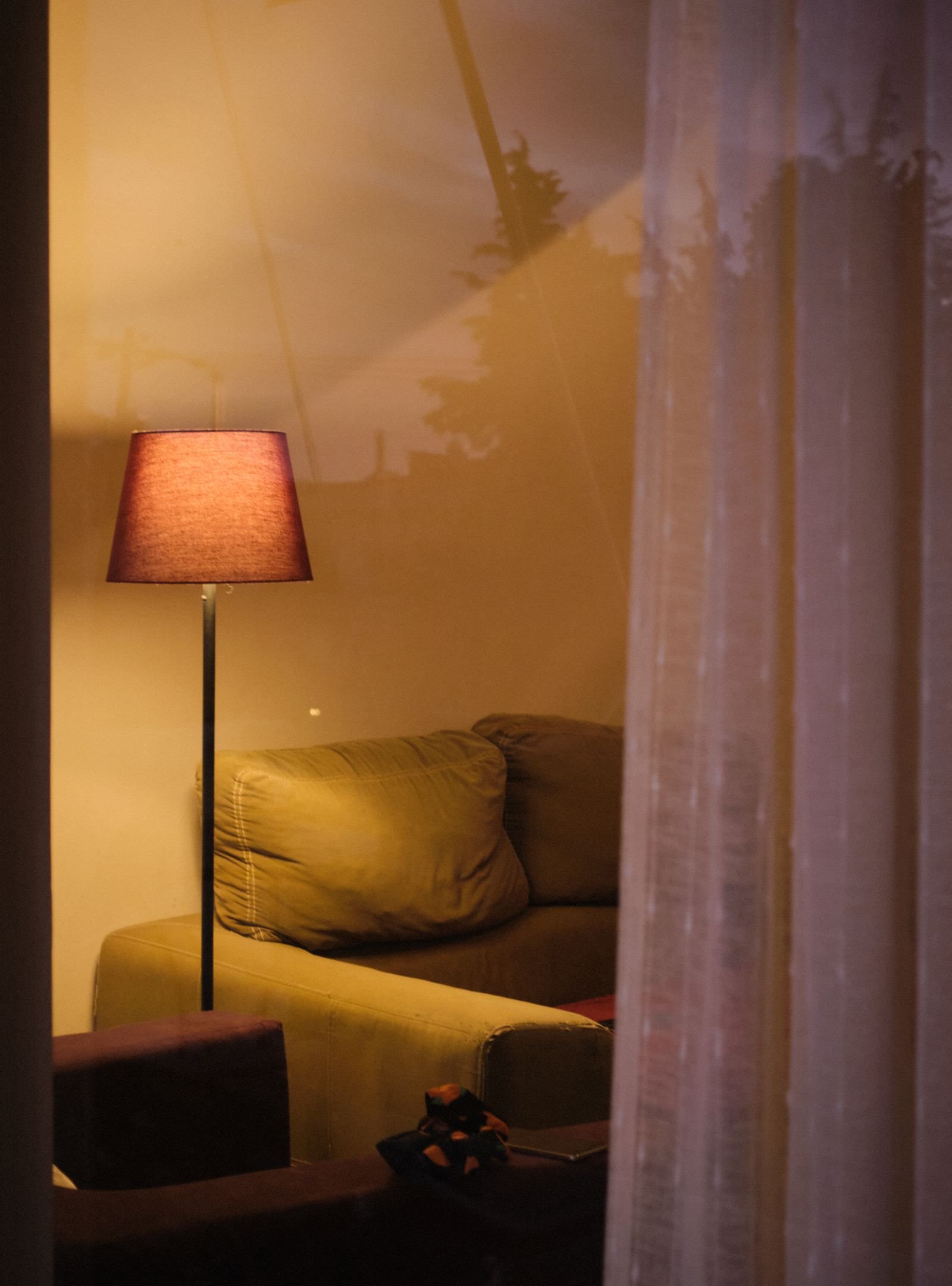

By mid-November, most of the UK is dark by 4.30 pm. That is roughly eight hours of evening, every evening, for four months — which means lighting is not a finishing touch in a British home, it is the thing you actually live in. Get it warm and layered, and a small flat feels like a retreat. Get it wrong — one bright ceiling light — and the same room feels like a waiting room.
The good news is that warm lighting is one of the cheapest upgrades in home decor. No rewiring, no electrician, and in most cases no new furniture. What follows is a room-by-room guide built around the homes most of us actually live in: Victorian terraces, 1930s semis, rented flats and new-build apartments, where the wiring is fixed and the budget is finite.
Start with the number that matters: 2700K
Light colour is measured in Kelvins. Lower is warmer. For living spaces, you want 2700K — labelled “warm white” on the box. This is the colour of a traditional incandescent bulb and of candlelight, and it flatters wood, fabric and skin.
The common mistake is buying “cool white” (4000K) or “daylight” (5000K and above) for a living room because they sound brighter. They are brighter, and they are also the reason a room can feel cold and clinical at 7 pm. Keep cool white for the kitchen worktop and the bathroom mirror, where you need to see clearly. Everywhere you relax, use 2700K.
Check the bulbs you already own before buying anything. Many homes have a mix — a warm bulb in one lamp, a cool one in another — and simply swapping the odd ones out, at £2 to £4 per LED bulb, can transform a room in ten minutes. LED bulbs last around 15,000 to 25,000 hours, so a £3 bulb in a lamp you use four hours a night will last a decade.
The three-layer rule
Interior designers talk about three layers of light, and the rule is worth stealing because it works in a box room as well as a barn conversion.
Ambient light is the general background glow — a ceiling light, but dimmed, or a pair of wall lights. Task light is focused light for doing something: a reading lamp, a kitchen counter light. Accent light is the decorative layer: candles, fairy lights, a lamp glowing inside a bookcase.
A cosy room has all three, all warm, and none of them too bright on its own. A single ceiling pendant at full brightness gives you one harsh layer. Three small warm sources at different heights give you a room that feels lit without ever feeling lit up. As a rough guide, aim for two to three light sources in a small living room, three to four in a larger one, and never rely on the ceiling light alone after dark.
Dimmer switches help enormously. A plug-in dimmer for a table lamp costs £8 to £12, and a dimmable LED bulb in an existing pendant costs £3 to £5. If your ceiling light is not dimmable, simply use a lower-wattage bulb in it — a 40-watt equivalent (around 470 lumens) instead of 100-watt — and let the lamps do the work.
The living room: lamps at sofa height
The living room is where warm lighting pays off most, because it is where you spend the dark hours. Put lamps where people sit, not where the ceiling rose happens to be. A table lamp on a side table beside the sofa, at roughly seated eye height (about 60 to 75 centimetres from the floor to the shade), throws warm light across faces and books without glare. A floor lamp behind an armchair does the same job in a corner, and costs £25 to £60.
If your sofa faces a chimney breast, use the alcoves. A small lamp in each alcove, or a pair of battery-operated candles on the mantel, frames the fireplace and gives the room symmetry for very little money. In a flat without a fireplace, a lamp on top of a bookcase — light washing up the wall and across the ceiling — makes a low ceiling feel higher, which is a useful trick in new-build rooms with 2.4-metre ceilings.
Add candlelight as the third layer. Real candles are cheapest — tea lights cost pennies — but in a small room, or a home with children or pets, LED pillar candles are the safer choice. A set of three costs £10 to £15, runs on batteries for weeks, and from across the room looks convincing, especially inside a lantern or a glass hurricane, which hides the plastic base.
Cordless lamps: the renter’s best friend
Cordless, rechargeable lamps are the newest useful thing in home lighting, and they suit rented flats particularly well because they need no wiring and no socket. A cordless table lamp costs £20 to £45, charges by USB in about four hours, and runs for eight to fifteen hours on a charge. Put one on a windowsill, a dining table or a bathroom shelf — anywhere a wired lamp cannot go — and the room gains a warm pool of light exactly where you want it.
They are also genuinely practical in older homes. Victorian terraces are notorious for having one socket per wall, usually behind the sofa. A cordless lamp on the mantel or the hall table solves that without an extension lead trailing across the room. Keep one by the front door as well: a warm light in the hallway is the first thing you see coming home on a dark evening, and it costs nothing to run.
The bedroom: low, soft and phone-free
Bedrooms need the lowest light in the house. A bright ceiling light at 10 pm tells your brain it is daytime, which is the opposite of what you want. Use bedside lamps with warm bulbs and, ideally, fabric shades, which soften the light further. A lamp with a dimmer, or a smart bulb you can dim from your phone (£8 to £15), lets you drop the light gradually through the evening.
Fairy lights work well in bedrooms, but keep them restrained: one string along a headboard, a curtain pole or a shelf, not four strings stapled to every wall. A 5-metre string costs £6 to £10 and gives a gentle glow that is bright enough to read by in a pinch and soft enough to fall asleep beside. Avoid string lights that flash or change colour in a bedroom — steady warm white is restful; disco is not.
If you read in bed, a small clip-on or rechargeable reading light (£10 to £20) beats a bright bedside lamp, because it lights the page without lighting your partner. In a box room, where the bed takes up most of the floor, a wall-mounted reading light above the headboard saves the bedside table entirely.
The kitchen and bathroom: warm, but bright enough to work
Kitchens and bathrooms are the exception to the warm-everywhere rule — but only partly. You still want warm light, just more of it, and in the right places. Under-cabinet LED strips (£15 to £30 for a 2-metre strip, usually plug-in or battery) light the worktop without lighting the whole room, and in 2700K they keep the kitchen feeling like part of the home rather than a laboratory. A pendant over a dining table or a kitchen island, hung 75 to 90 centimetres above the surface, gives a warm pool for eating without glare.
In the bathroom, a warm light around the mirror — a pair of small wall lights or an LED mirror strip — is kinder than a single bright ceiling light, and it is better for your face in the morning. Keep the main ceiling light on a dimmer or a lower-wattage bulb so a midnight visit does not feel like an interrogation. Battery candles on a bathroom shelf, safely away from towels, add a spa-like touch for about £10.
Hallways, stairs and the front door
Hallways are often lit by a single bare bulb, which is a waste: a hallway is the first and last room you see every day. A warm wall light or a small table lamp on a console table changes the whole feel of coming home, and a plug-in night light with a warm LED (£5 to £8) on the landing means nobody stumbles on the stairs at 2 am.
On the stairs themselves, safety comes first. If your stairwell is dark, a battery-operated motion-sensor light (£8 to £12 for a pair) on the wall at ankle height lights each step without waking the house. Outside, a warm porch light — 2700K, not the blue-white security floodlight — makes the front door welcoming and still lets you see the keyhole. A solar porch light costs £10 to £20 and needs no wiring at all.
Common mistakes that kill the cosiness
First, mixing colour temperatures. One cool-white bulb among warm ones stands out like a fluorescent tube in a cottage. Check every bulb in a room and match them.
Second, lights that are too bright. If you squint when you switch a lamp on, the bulb is too strong. Drop a wattage, add a dimmer, or put a fabric shade on it.
Third, lights at only one height. A ceiling light alone, however warm, flattens a room. Add one low source — candles, a table lamp — and the room gains depth instantly.
Fourth, bare bulbs. A visible bulb, especially an LED, is harsh. Shades, lanterns and frosted glass exist to soften light; use them, even on a budget. A paper lantern shade costs £5 to £10 and transforms a pendant.
Finally, leaving the big light on out of habit. Make it easy to use the lamps instead: put them on a single extension lead with a switch by the sofa, or use smart plugs (£10 to £15 each) so one tap switches the lamps on and the ceiling light off.
Frequently asked questions
What colour temperature is best for a cosy living room?
2700K, labelled warm white. It mimics candlelight and traditional bulbs, flatters wood and fabric, and feels relaxing in the evening. Avoid 4000K and above in living rooms and bedrooms.
How many lamps does a small living room need?
Two to three warm sources: typically one table or floor lamp beside the sofa, one lamp or candle group on a second surface such as a bookcase or mantel, and optionally fairy lights or candles as a third layer. The ceiling light should be dimmed or switched off in the evening.
Are cordless lamps worth it?
Yes, especially in rented flats and older homes with few sockets. A good cordless lamp costs £20 to £45, charges by USB, and runs for eight to fifteen hours. They are ideal for windowsills, hall tables and dining tables where no socket is nearby.
How can I make my home feel cosier without rewiring?
Swap bulbs to 2700K, add two warm lamps, use candles or LED candles, and put lights at different heights. Plug-in dimmers (£8 to £12) and smart plugs (£10 to £15) give you control without an electrician, and the whole change can cost under £50.
Your warm-lighting checklist
- Every living-room and bedroom bulb checked and matched at 2700K
- Three layers in the living room: ambient, task and accent
- One lamp at sofa height, plus candles or fairy lights as a low layer
- One cordless lamp for a socket-free spot (hall, windowsill, mantel)
- Bedside lamps dimmed or on fabric shades; fairy lights steady, not flashing
- Kitchen worktop lit by warm under-cabinet strips; pendant 75 to 90 centimetres above the table
- Hall and landing lit warm, with a motion-sensor light on dark stairs
- No bare bulbs, no mixed colour temperatures, no single bright ceiling light after dark
Warm light is not about buying more lamps. It is about putting the right light, at the right warmth, at the right height — and then switching the big light off. Do that, and a dark November evening becomes the best thing about the house.
Paste your AdSense code in Ad Inserter Block 3