

I first saw scalloped tile in a cafe bathroom in 2022 and I stood there way too long staring at the wall. You know that moment when you forget you’re in a public restroom because the design is that good? That was me. Deep green fish-scale tiles running floor-to-ceiling behind the mirrors, catching the light in this rippling way that made the whole small room feel like the inside of a wave. I took a photo. I still have it on my phone. I’ve shown it to three different contractors since, and every single one of them nodded like they’d seen this exact obsession before.
That bathroom rewired my brain a little. I’d walked past scalloped tile in design photos for years and never really registered it. Flat images don’t do it justice. In person, with real light moving across the curves, it’s a whole different animal. So if you’re even a little bit tempted by this tile, here’s everything I’ve learned since that cafe bathroom. Including the stuff I wish someone had told me before I started getting quotes. Especially that stuff.
What Scalloped Tiles Actually Are
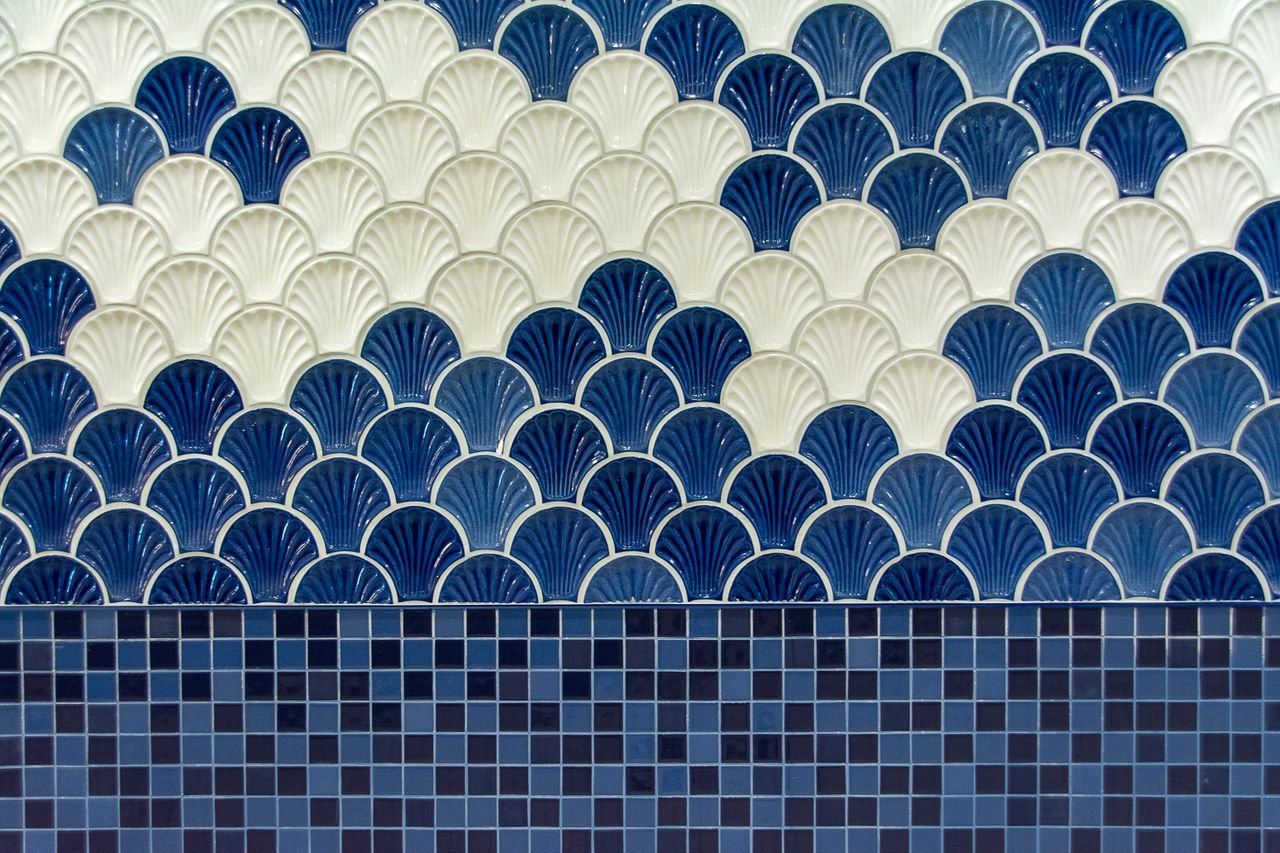
I tried to describe these to my dad over the phone once. “They’re like… mermaid scales, dad. Little rounded tiles that overlap.” Long pause. “Like fish?” he said. “Kinda like fish,” I said. He still doesn’t get it, but honestly that’s not a bad description. Fish-scale tiles. That’s the other name, and it tells you most of what you need to know.
Each tile is one scallop shape, usually a few inches wide, installed in overlapping rows. The rounded bottom edges create that scale pattern. They come in ceramic, which is what most people get. Porcelain too. Marble if you’re feeling fancy. Glass if you’re feeling really fancy and also not worried about money.
Here’s the thing nobody tells you upfront. The size of the scallop changes the whole look. Small tight scales read modern and graphic. Big loose scallops feel softer. More traditional. The cafe bathroom had medium scales, maybe three inches across, and it hit the sweet spot so hard I’ve been chasing it ever since.
And yes, these are part of the bigger round-everything moment. It’s the same instinct as the curves trend with sculptural rounded furniture taking over homes in 2026. Soft edges everywhere.
Kitchen Backsplash Ideas
My friend Dana did her backsplash in a soft white scallop last year and her kitchen went from “fine” to “wait, show me that again” overnight. I’m not exaggerating. Same cabinets. Same counters. The only thing that changed was the tile, and suddenly her kitchen was the room everyone drifted into at parties.
The backsplash is where most people start with scallops, and it’s the perfect starter project. Small area. Huge impact.
White or cream scallops are the safe choice, and I mean that as a genuine compliment. They add texture without adding color, which means they work with any cabinet color and any countertop. If you’re nervous about committing to a trend, white scallop is the version with training wheels.
But the bold versions are where it gets fun. Deep green like my cafe bathroom. Navy. Terracotta. Black scallops with light grout are dramatic in the best way. Bold tile, quiet everything else. Let the backsplash be the star. One diva. That’s the rule.
One practical thing. Run the tile all the way up behind the range if you can. Not just the standard 18 inches. The full-height look is what makes it feel designed instead of default.
If you’re rethinking the whole kitchen, the kitchen decor ideas that feel fresh post has more ways to build around a statement backsplash.
Bathroom Ideas (Where Scallops Really Shine)
My neighbor did her shower niche in a blush scallop against white subway tile and it’s the cutest detail I’ve seen in any bathroom, ever. The niche is maybe a foot wide. A foot! And it’s the thing everyone asks about. Small dose, big charm.
Honestly, bathrooms might be the best use case for scalloped tile, period. The scale pattern has this watery quality that just belongs in a room with running water. Your brain registers it before you even think about it. Fish scales. Water. Bathroom. Done.
The shower wall is the showstopper move. Floor-to-ceiling scallops in a shower turn a basic bathroom into a spa situation. I priced this out for my own bathroom and had to sit down. But I’m still saving toward it because I can’t unsee it.
Can’t do the whole shower? Do the vanity wall. Or steal my neighbor’s move and just do the niche. A contrasting scallop in the niche costs almost nothing and looks like you hired someone with taste.
Color Choices: What Works
Green is the classic scallop color and I’m not even a little bit sorry about saying so. Deep emerald’s the headliner. Soft sage if you want calm. Green plus the scale shape reads as natural and timeless. It doesn’t scream trend. It whispers it.
Blues are the other natural fit. Powder blue, dusty navy, teal. Blue scallops in a bathroom feel like they were always meant to be there.
Neutrals are the long game. White, cream, warm gray, soft beige. A neutral scallop gives you the texture and pattern without any color commitment. That’s what I’d pick if I were selling the house soon.
The Grout Conversation Nobody Has With You
A friend of mine did white scallop tile with dark gray grout in her kitchen. In photos? Stunning. In person, at 7am? Busy. Really busy. Photos lie a little. They flatten everything into two dimensions and make contrast look crisp.
So here’s what I wish someone had told her. Grout color changes scalloped tile more than almost any other tile shape. Because there are so many grout lines. The grout is basically drawing the pattern for you. Choose wisely.
Matching grout, close to the tile color, makes the scales blend into a soft textured surface. Contrasting grout makes every single scale pop. There’s no wrong answer. There’s just the answer you’ll still like at 7am.
My take: match the grout unless you’re sure you want the drama. My contractor said the same thing, which is how I know it’s true.
Pairing Scallops With Fixtures and Finishes
The tile doesn’t exist in a vacuum, and I learned this standing in that cafe bathroom staring at the brass mirrors. They were these round brass mirrors against the deep green tile, and I think that’s half of why I fell in love with the whole room.
Brushed brass or gold against green or blue scallops. That’s the combination I keep seeing in the prettiest bathrooms. Warm metal, cool tile, and the whole thing glows.
Silver and chrome are having their own moment too. The silver comeback in home decor for 2026 gets into how cool metallics are showing up. Polished nickel faucets against white scallop tile is clean and classic.
The Budget Route (Because Real Tile Is Pricey)
Let’s be honest about money, because the quotes I got were honest with me in a way I didn’t enjoy. Real scalloped tile, installed, isn’t cheap. The tile itself runs more than basic subway tile. My quotes came back higher than I expected, and I expected high.
Labor is the killer. Those curves take time. I get it. It’s skilled work. It still hurt.
So what if you love the look but not the price? Peel-and-stick scallop tiles exist now, and they’ve gotten surprisingly good. I put a peel-and-stick scallop backsplash in my laundry room as a test. Cost me sixty dollars and a Saturday afternoon. From three feet away you’d never know it’s not real tile.
Another trick: use real scallop tile in a small, high-impact area and cheaper tile everywhere else. The shower niche. A strip behind the range. You get the look where it counts and save where nobody looks.
Scallops keep showing up on trend lists because they actually deliver. If you’re weighing whether it’s worth trying, the home decor trends worth trying this year roundup puts it in context.
Hire It Out or DIY?
I’m going to be straight with you. Tiling is one of those jobs that looks doable on video and humbles you in person. The cheerful person with the trowel makes it look like frosting a cake. It’s not frosting a cake.
Scalloped tile? Every piece is curved. The pattern has to line up across the whole wall. I consider myself reasonably handy. I wouldn’t tile my own scallop backsplash. I know my limits.
The peel-and-stick version, though? That’s a genuine DIY. I did my laundry room in an afternoon with a utility knife and a level. No thinset, no wet saw, and no crying.
Frequently Asked Questions
Are scalloped tiles just a trend, or will they look dated?
My friend asked me this while we were standing in the tile aisle, holding a sample board like it might bite her. Here’s what I told her. Scallop shapes have been used in tile and architecture for literally centuries. It’s a classic shape having a moment. Pick a color you actually love instead of the one that’s popular right now, and you’ll be fine.
How much more does scalloped tile cost than regular tile?
Real numbers from my quoting adventure. The tile itself was roughly double the price of basic subway tile per square foot. But the bigger shock was labor. My contractor quoted about 40 percent more for installation than a straight tile job. That’s why the niche-only or backsplash-only approach is so smart.
Do the curved edges make them harder to clean?
My sister’s first question. Honestly? A little, but not in the way you’d expect. The tile faces wipe down just like any tile. The grout lines are the thing, because there are more of them with all those curves. That’s why I’m team epoxy grout in wet areas.
Can I use scalloped tile on the floor?
My coworker asked me this because she fell in love with a scallop sample and wanted it everywhere. Technically yes, they make floor-rated scalloped tiles. But the scale pattern underfoot is a lot. It’s busy. I told her to keep the scallops on the walls and pick something calmer for the floor.
What if I rent? Any way to get the look?
This one’s personal because I rented for years. Peel-and-stick is your answer. The good ones look genuinely convincing. They come off without damage when you move. A backsplash-sized area costs less than a hundred dollars. Renters deserve pretty tile. We just have to be sneakier about it.
So that’s my scalloped tile brain dump, from the cafe bathroom that started it all to the quotes that made me sit down twice. If you’re on the fence, get a sample board and live with it for a week. You’ll know.
Paste your AdSense code in Ad Inserter Block 3