
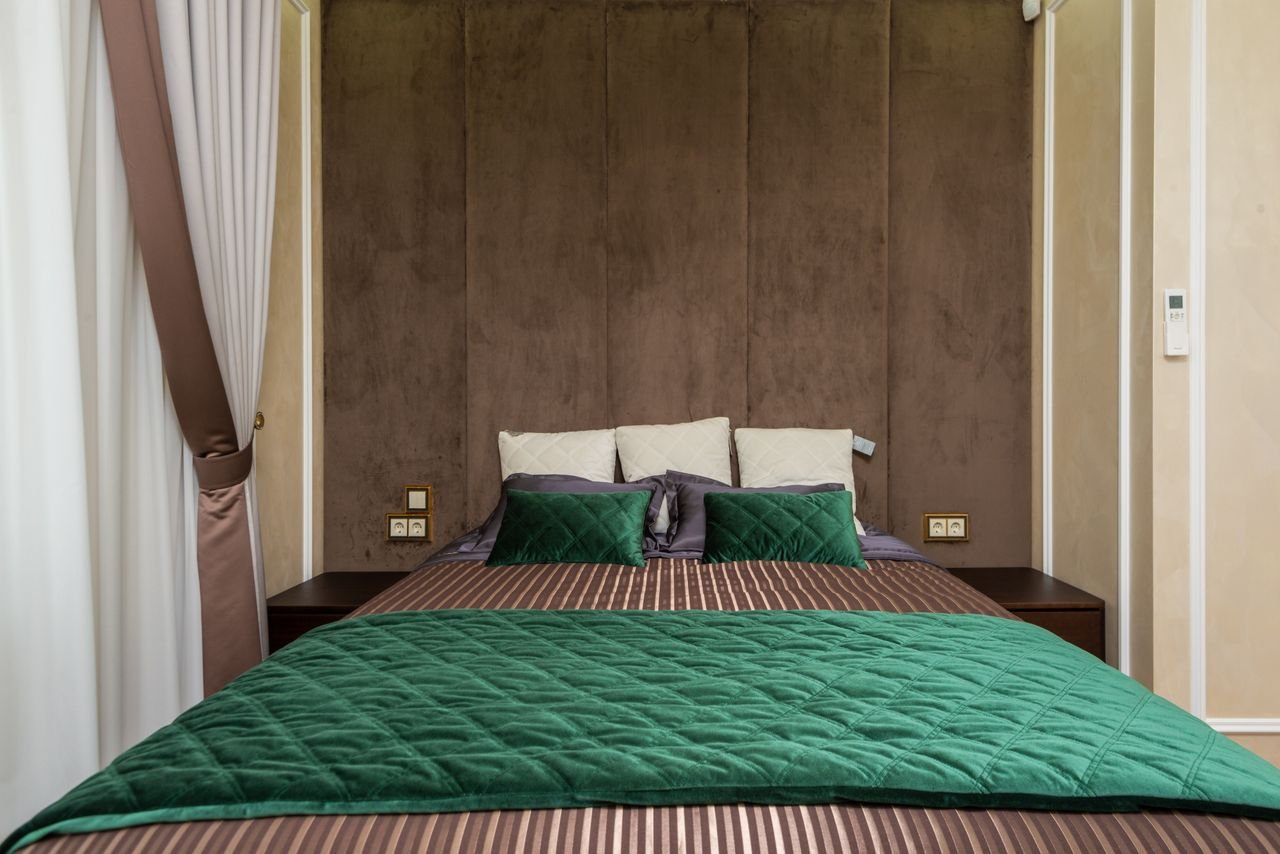

I painted my bedroom green last year and my mother-in-law walked in, went quiet, and said, “Well. It’s certainly a color.” Which is the most devastating review I’ve ever received for anything. I’ve been roasted by toddlers with more mercy.
Here’s the thing though. She wasn’t wrong that it was a lot. She was wrong that it was wrong. Because I’d done the thing everyone tells you not to do. I painted the walls, the trim, the baseboards, the door, and the ceiling all the same deep green. No white ceiling floating on top. No crisp white trim cutting everything into pieces. Just green, everywhere, like I’d been swallowed by a very stylish forest.
And for the first forty-eight hours, I hated it. Genuinely thought I’d ruined the room. It felt like a cave. I sat on the bed staring at the ceiling doing paint math in my head. Then on day three something flipped. I walked in after work, the lamp was on, and the room didn’t look like a cave anymore. It looked like a hug.
That’s color drenching. One color, everywhere, no apologies. And it’s the trend I’m most evangelical about right now, because it’s the cheapest dramatic transformation in all of decorating.
What Color Drenching Actually Means
The name sounds aggressive, but the idea is simple. You pick one color and you commit. Walls, trim, baseboards, doors, ceiling. Same color throughout. The only thing you change is the finish. Flat or eggshell on the walls, satin or semi-gloss on the trim.
That’s the opposite of how most of us were taught to paint. The standard move is walls one color, ceiling bright white, trim bright white. But all those white edges are basically outlines, and outlines make a room feel smaller and choppier. Color drenching erases the lines. When the wall and the ceiling are the same color, your eye can’t find the corner as easily, so the room feels bigger and softer.
I’ll be honest, the first time I heard about this I thought it was one of those designer stunts. Then I did it, accidentally on purpose, because I’d bought too much paint and didn’t feel like buying white for the ceiling. Laziness is the mother of my best decorating decisions.
Pick a Color With Some Guts
Here’s where people mess up. They try to color drench with a timid color. A pale beige. And then they stand in the finished room wondering why it just looks… beige. The technique needs a color with enough depth to actually do something. It needs guts.
Deep greens and warm terracottas. Moody blues if you’re feeling calm. Rich plums or chocolate browns if you’re feeling bold. Colors that would look intense as an accent wall become something completely different when they’re everywhere. An accent wall says “look at me.” A drenched room says “settle in.”
My green is this deep, muddy, forest-meets-olive situation. In the can it looked almost black and I had a full moment of panic at the paint counter. On the wall it reads as this rich, enveloping green that changes all day. Morning it’s fresh. Evening, with the lamp on, it’s the coziest thing I’ve ever lived in.
If you’re drawn to the warm side, go read Earthy Color Palettes: The Warm, Grounded Hues Defining Homes in 2026. Terracotta, clay, ochre, warm browns. These are the colors that were basically made for drenching.
Yes, the Ceiling Too. I Know. Just Do It.
That’s the part where everyone balks. Walls and trim, fine. But the ceiling? I felt the same way. I stood on the stepladder with the roller, staring up at my perfectly white ceiling, having a genuine moral crisis. Painting it felt like breaking a law.
Then I did it, and the room immediately made sense. A white ceiling on colored walls creates this hard line at the top, and your eye keeps snagging on it. When the ceiling matches, the line disappears and the whole space feels wrapped. Cocooned.
The Trim Question (Finish, Not Color)
So if everything’s the same color, what happens to the trim? Here’s the move: same color, different sheen. Walls in flat or eggshell, trim and doors in satin or semi-gloss. The trim doesn’t disappear. It just stops shouting. You still see the beautiful molding, but as texture instead of contrast.
My baseboards are semi-gloss green and I catch myself admiring them at weird moments. Nobody admires white baseboards. Green satin baseboards have a whole personality. I didn’t expect to have feelings about baseboards.
Frequently Asked Questions
Will it make my room feel smaller?
That’s the number one fear, and I had it too. But here’s the weird thing. My bedroom is not big, and the green made it feel bigger, not smaller. Because there are no white lines chopping it up. Your eye just flows. It’s counterintuitive and it’s true.
What if I hate it after a week?
My sister asked me this while I was mid-roller, which was not helpful timing. Here’s the truth. The first 48 hours are the worst. It looks wrong because it’s so different. Give it three days. Live with it. If you still hate it on day four, paint it back. It’s just paint. But almost everyone I know who tried it kept it.
Can I do this in a rental?
Check your lease first, obviously. But if you’re allowed to paint (and you promise to paint it back), color drenching is actually great for renters. One color means fewer cans to buy. And painting it back white is one weekend, not three.
That’s my color drenching manifesto. One color. Full commitment. No white ceiling. Your mother-in-law might go quiet. That’s how you know it’s working.
Paste your AdSense code in Ad Inserter Block 3