
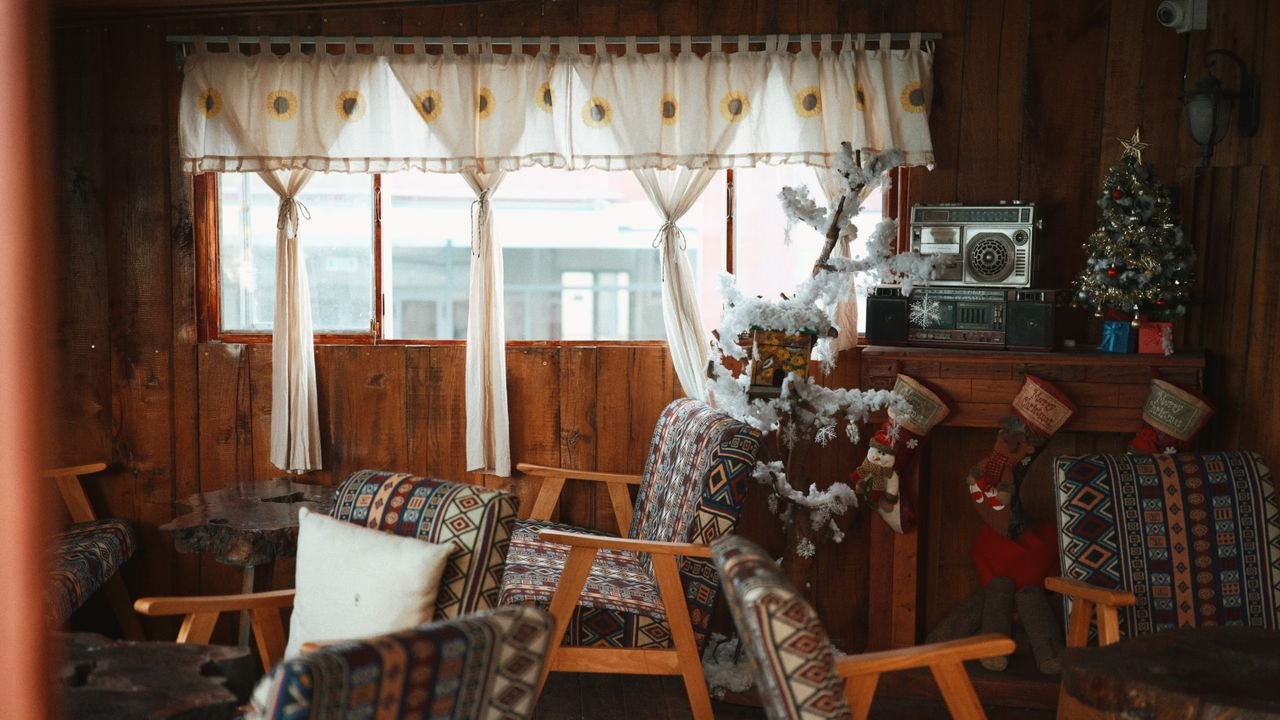

With energy prices high on both sides of the Atlantic, a cold house costs real money every month. The good news is that some of the cheapest winter upgrades are also decor decisions: what hangs at your windows, what covers your floors, and how you arrange the furniture. None of this replaces proper insulation, but it can cut the draughts and make a room feel warm at a lower thermostat setting — and that shows up on the bill.
Stop the draughts first
Draught-proofing is the least glamorous and most effective place to start. Self-adhesive foam strips around doors and windows, a brush strip under the front door, a letterbox draught excluder, window film on single glazing, and a chimney balloon if you have a fireplace you never use. Most of it is renter-friendly, comes off without damage, and costs very little. To find the draughts, hold your hand near window frames and door edges on a windy day, or watch a candle flame flicker — where the air moves, heat is leaving.
Curtains that actually work
Not all curtains help with warmth. The ones that do are floor-length, thermal-lined, hung close to the wall and wide enough to cover the whole window frame, not just the glass. Close them at dusk to trap the day’s heat, and open them on sunny days on south-facing windows to let warmth in for free. One trap to avoid: if a radiator sits under the window, your curtains should end at the sill, not hang over the radiator, or you send the heat straight out through the glass.
Floors, rugs and door snakes
Hard floors lose heat through your feet as much as through the air. A rug with a thick underlay on wood or tile insulates the spot you actually walk and sit on, and it changes how warm a room feels the moment you step in. A draught snake at an internal door — or a rolled towel in a pinch — keeps the heat in the room you’re using. Close the doors to rooms you’re not using, but don’t seal the house completely: a little ventilation each day matters, because stale, damp air causes mould, which is a real problem in airtight flats.
Heat the room you’re in
There is no point heating the whole house to warm one room. Keep the living room door shut in the evening, put a radiator reflector panel behind radiators on outside walls so heat bounces into the room instead of into the brick, and don’t push the sofa up against a radiator — it blocks the heat from reaching you. If your heating has thermostatic radiator valves, turn down the rooms you barely use and keep the rooms you live in comfortable, rather than running everything at the same temperature.
Warm light, lower thermostat
A room that looks warm feels warm, and that is worth a degree on the thermostat. Swap harsh cool-white bulbs for warm-white ones (around 2700K), use lamps at different heights instead of one bright ceiling light, and add throws and cushions to the sofa so sitting down feels inviting. Dropping the thermostat by a single degree saves a noticeable amount over a whole winter, and the throws and lamps make up the difference in comfort. It is a small trade that most people stop noticing within a week.
What pays back and what doesn’t
Worth doing first: draught-proofing, thermal curtains, radiator reflectors and thick rugs — all cheap, all quick, all with a payback inside one winter. Not worth it: running cheap portable electric heaters for hours, which cost far more per unit of heat than central heating, or heating rooms nobody uses. If you own your home, loft and wall insulation beat every decor trick in the long run — but that is a bigger job with a bigger budget, not a weekend project. Start with the decor layer now, and plan the insulation layer when you can.
FAQ
Do thermal curtains really help?
Yes, noticeably, if they cover the whole window and close fully. A lined, floor-length pair beats a thin decorative curtain by a wide margin — the lining and the full coverage are what do the work.
Will a rug warm a room?
It warms the floor you walk on and adds a layer of insulation, which makes the room feel warmer. It won’t replace heating on its own, but it is one of the cheapest comfort upgrades there is.
Should I close off unused rooms?
Yes for heat, but open their windows briefly each day to ventilate. Without airflow, damp and mould follow, especially in well-sealed modern flats.
Can renters do any of this?
Almost all of it. Draught strips, window film, curtains, rugs and radiator reflectors all come off without damage, and landlords rarely object to changes that lower bills and prevent damp.
Paste your AdSense code in Ad Inserter Block 3