
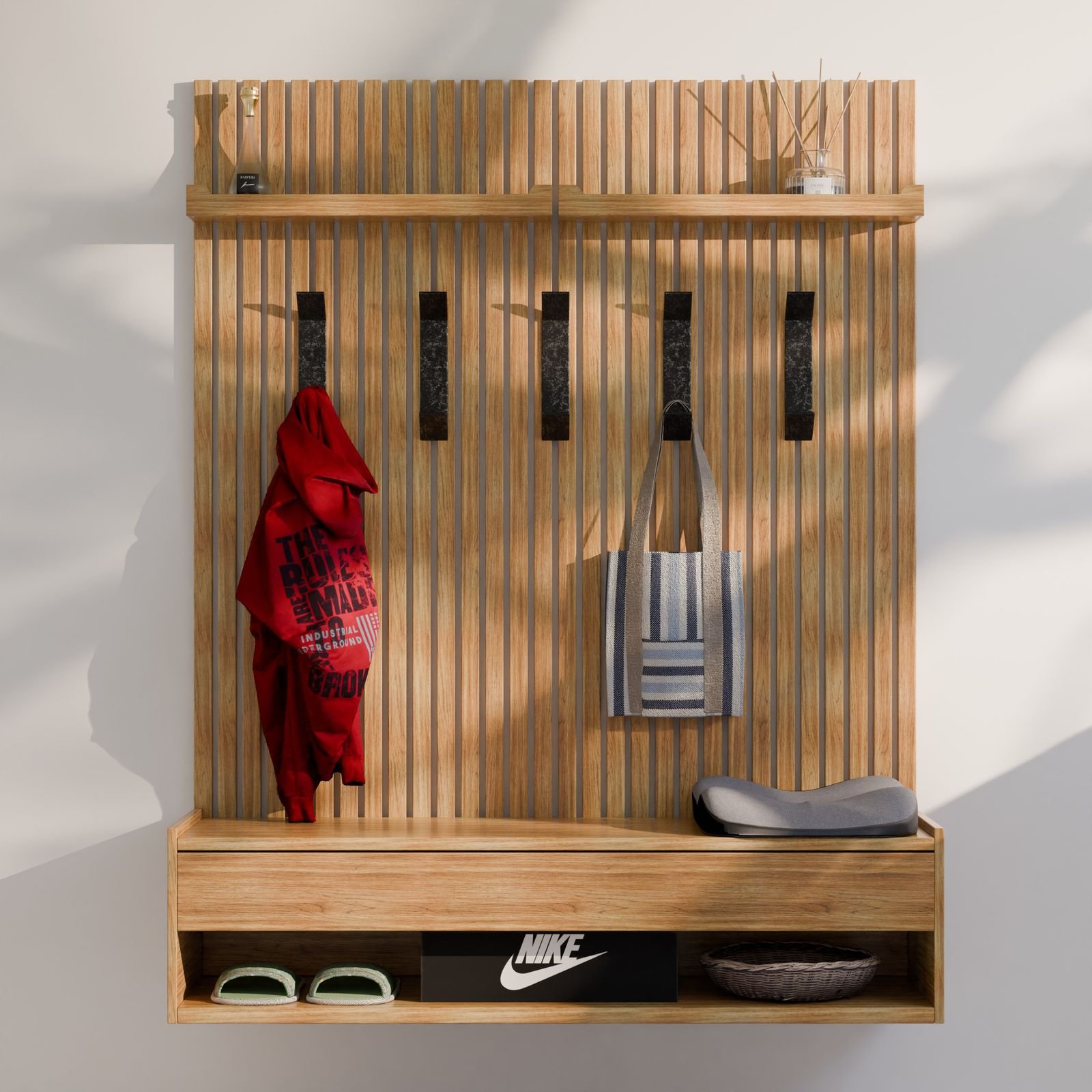

Many European apartments open straight from the front door into the living room, with no hallway at all. Shoes, coats, keys, and bags then have nowhere to go, and the whole flat can look untidy within minutes of coming home. You do not need a hallway to have an entryway. You need a clear zone, even if it is only a metre wide, and a place for everything you carry in.
Start by marking the zone. A small rug by the door, a different paint colour on one short stretch of wall, or a narrow console table all signal where the entrance ends and the living room begins. The zone does not need walls. It needs a boundary your eye can see, so coats and shoes stop drifting further into the room.
A narrow console or a wall-mounted shelf is usually better than a bulky hall table. Look for a console no deeper than 25 to 30 centimetres, or a floating shelf at waist height with hooks underneath. That is enough for keys, sunglasses, and post, without blocking the walkway. If you cannot fit a table at all, a single shelf and a row of hooks still create a working entry point.
Storage must be vertical in a flat with no hallway. Hooks at two heights work well: higher hooks for coats, lower hooks for children’s bags or a dog lead. A tall, narrow shoe cabinet with a closed front hides shoes and keeps the floor clear. Avoid open shoe racks by the door in a small flat, because they collect dust and always look full. One closed cabinet, emptied regularly, looks far tidier.
A mirror is the most useful entryway item after hooks. A mirror by the door lets you check your appearance before leaving, and it reflects light into a dark entrance corner. Choose a mirror that fits the wall space, rather than the largest one you can find. A round mirror above a console, or a tall narrow mirror beside the door, both work in small spaces.
Lighting matters, especially in older European buildings where the entrance may have no window. A small wall light, a plug-in lamp on the console, or a battery-operated light above the hooks can transform a dark corner. Warm light feels welcoming when you come home in the evening, and it helps guests find the door area without searching.
Keep a landing spot for daily essentials. A small bowl or tray for keys, a hook for a bag, and a place for post stop the most common clutter. Empty the tray once a week, and move anything that is not used daily somewhere else. An entryway only works if it holds what you actually carry, not everything you own.
For renters, use damage-free options. Adhesive hooks rated for the weight of a coat, a leaning mirror, and a freestanding shoe cabinet all avoid drilling into walls. A rug and a console that stand on the floor need no fixing at all. Check your rental agreement before drilling, and keep the original fixings if you do make a hole, so you can restore the wall when you leave.
Add one welcoming detail, and stop there. A small plant that tolerates low light, a framed print, or a scented candle on the console makes the entrance feel like part of the home. More than one or two decorations in a tiny zone will crowd it. In a flat with no hallway, restraint is what makes the entrance look intentional rather than improvised.
FAQ
How do I create an entryway with no hallway? Mark a zone with a rug or a console, add hooks and a small shoe cabinet, and keep everything for coming and going inside that zone.
What furniture fits a tiny apartment entrance? A narrow console, a wall shelf with hooks, and a closed shoe cabinet usually fit. Measure the walkway first and leave at least 80 centimetres clear to pass through.
How can renters make an entryway without drilling? Use adhesive hooks, freestanding furniture, a leaning mirror, and a rug to define the zone, all without fixing anything to the wall.
Scandi Hallway Ideas for UK Homes: Light, Calm Entryways That Work in Narrow Spaces
Balcony Decor for European Apartments: Small Outdoor Spaces That Work All Year
Paste your AdSense code in Ad Inserter Block 3