

A basement family room can be the most-used room in an American home, or the least-used one. The difference is rarely the size of the renovation. It is usually light, warmth, and a layout that suits how your family actually spends time. You do not need to finish every wall to make a basement feel welcoming, but you do need to deal with the basics first.
Start with damp, light, and air before you buy furniture. Check for water marks, a musty smell, or damp patches after heavy rain, and fix leaks or drainage problems before decorating. A dehumidifier helps in many basements, especially in humid summers. If the room feels stuffy, check that vents are clear and that air can move. No amount of cosy furniture will fix a room that smells damp.
Lighting is the single biggest change you can make. Basements often have small windows and low ceilings, so one ceiling light is rarely enough. Layer the light instead: a ceiling fixture for general light, floor lamps beside seating, and a table lamp on a side table. Warm white bulbs, around 2700K, feel more like a living room than the cool white often used in utility spaces. If you have a small window, keep it uncovered or use a light blind so every bit of daylight gets in.
Flooring should be practical and warm underfoot. Carpet tiles are a good basement choice because a damaged tile can be replaced without redoing the whole floor. A large rug over concrete or vinyl plank also adds warmth and softens sound. Avoid thick wall-to-wall carpet if the basement has had damp problems in the past, and leave a rug pad underneath to stop slipping.
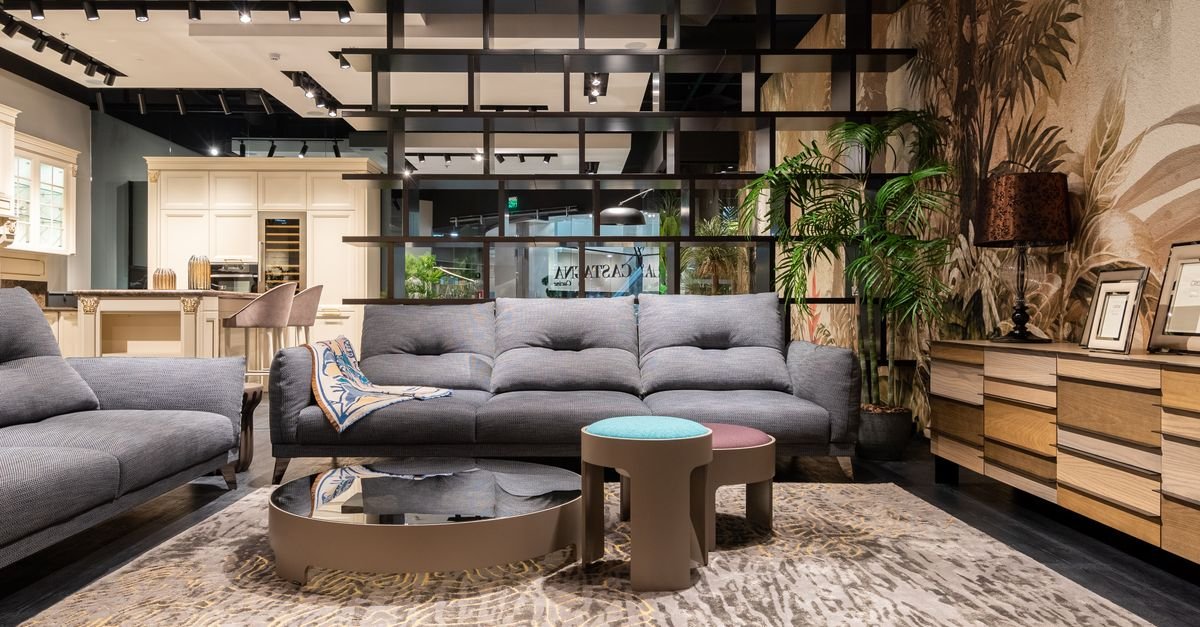
Choose seating for how you use the room. A sectional sofa works well in a basement family room because it fills a corner and gives everyone a place to sit for films or games. Add a couple of poufs or a storage ottoman that can be moved when children play. A low coffee table is safer in a low-ceiling room than a tall table, and a table with storage inside keeps controllers, chargers, and board games out of sight.
Zone the room instead of pushing everything against the walls. Put the television and seating in one area, a small table and chairs in another if you play games or do homework, and a reading chair near a lamp if space allows. A rug can mark each zone without building walls. Leave a clear walkway from the stairs to each zone so the room does not feel like an obstacle course.
Storage keeps a basement from turning into overflow space. Low cabinets along one wall, labelled bins on sturdy shelving, and a closed cupboard for seasonal items work better than open piles. Keep everyday items at easy reach and holiday decorations higher up or further back. If children use the room, give each child one bin for their own games or toys, so tidying has a clear end point.
Make the walls feel finished without a full remodel. Paint is the cheapest transformation: a warm off-white or a soft sage on drywall makes the room brighter, while one accent wall in a deeper colour can anchor the television area. If walls are bare block or paneling, a coat of suitable primer and paint, plus framed prints and a few shelves, can change the feel completely. Curtains are not needed in most basements, but a fabric wall hanging or a large print can soften hard surfaces.
Add comfort last, with textiles and sound. Throws, cushions, and a rug make a basement feel like a living room rather than a storage level. A small speaker or a soundbar improves film nights far more than a bigger television in a room with hard floors. If the room echoes, soft furnishings and a rug will help more than any single gadget.
FAQ
Do I need to fully finish my basement to use it as a family room? No. Fix damp and ventilation first, then improve lighting, flooring, and seating. A full remodel can come later if you want it.
What is the best flooring for a basement family room? Carpet tiles or vinyl plank with a large rug are practical choices. Both handle basement conditions better than thick carpet, and damaged sections are easier to replace.
How do I make a basement with no windows feel less dark? Use layered warm lighting, pale wall colours, light-coloured furniture, and mirrors or light artwork to reflect what light there is.
US Suburban Mudroom Ideas: A Tidy Drop Zone That Actually Gets Used
US Farmhouse Kitchen Storage Ideas: Practical Ways to Keep a Country Kitchen Tidy
Paste your AdSense code in Ad Inserter Block 3