
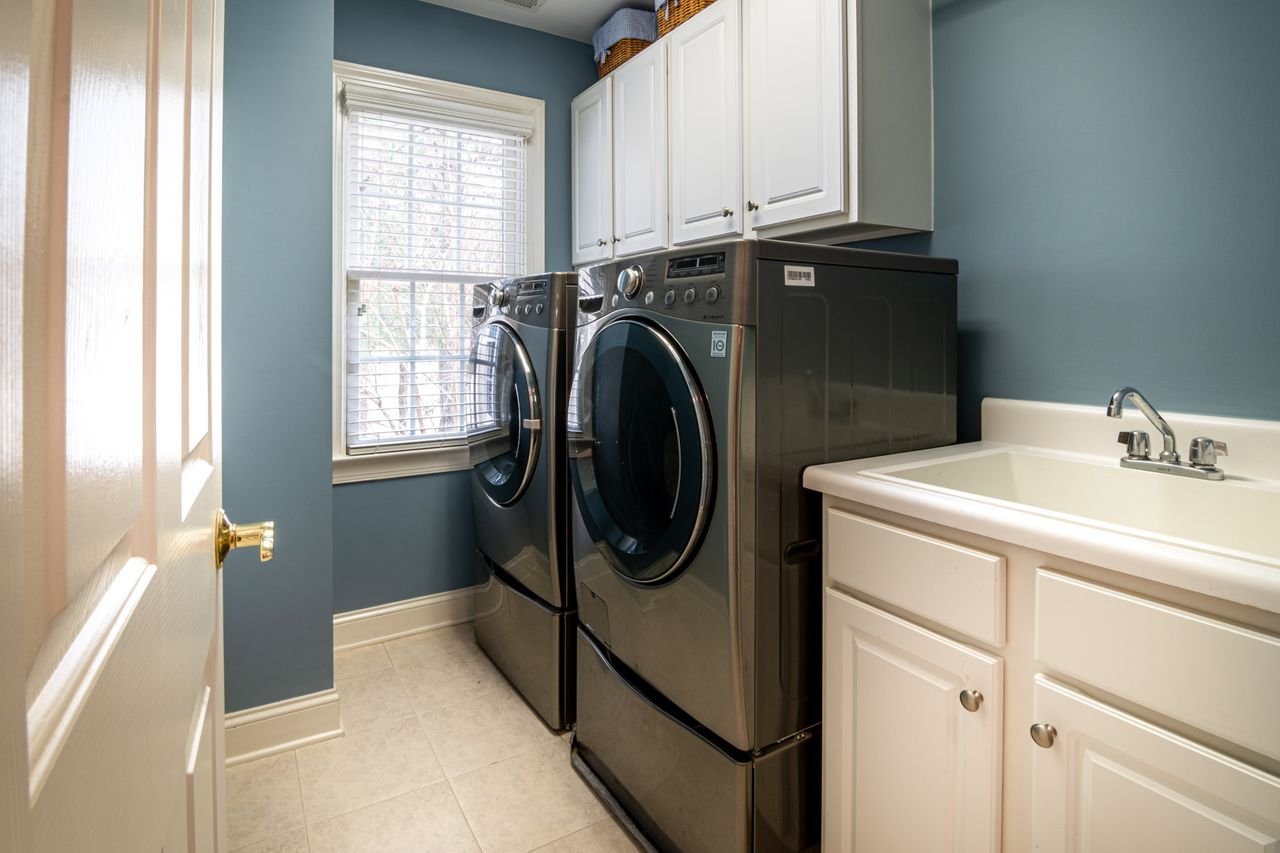

A laundry room does not need to be large to work well. In many American homes, especially smaller houses, condos and townhouses, the laundry area is a closet, a corner of a garage, or a narrow room off the kitchen. The difference between a frustrating setup and a smooth one is rarely square footage. It is layout, storage height and a clear place for every stage: dirty, washing, drying, folding and putting away.
Measure before you buy
Start by measuring before you buy anything. Note the width, depth and height of the space, the swing of the door, and where the water hookups, dryer vent and electrical outlet sit. A standard washer and dryer pair each need roughly 27 inches of width, plus at least an inch of breathing room on each side and space behind for hoses. If the door swing eats into the room, consider whether a sliding or bi-fold door would free up floor space. Write the measurements on your phone so you can check them in the store instead of guessing.
Stacked machines for a tight footprint
Stacked machines are the simplest fix for a tight footprint. A stacking kit lets a dryer sit safely on top of a washer, freeing the floor space beside it for a narrow rolling cart, a tall storage cabinet or a folding station. This works best when the ceiling is high enough to reach the dryer controls comfortably and the vent run stays short. If anyone in the household cannot comfortably reach the top controls, side-by-side machines with a counter over the top may be the better choice, even in a smaller room.
Give sorting a home
Give sorting a home, not a pile on the floor. Three slim bins or hampers labelled lights, darks and delicates stop the nightly hunt for a missing sock and make it obvious when a full load is ready. In a closet laundry, a pull-out hamper on casters or three stackable bins on a shelf above the machines can do the same job. Keep a small mesh bag for delicates hanging on a hook so those items never end up in the wrong wash by accident.
Use the wall, not the floor
Use the wall, not the floor. Open shelving above the machines holds detergent, stain remover and dryer sheets at eye level, but keep everyday items within easy reach and heavier bottles low. A wall-mounted drying rack that folds flat when not in use is far more useful than a freestanding rack that blocks the walkway. Add a retractable clothesline across a narrow room for shirts that should not go in the dryer, and a few sturdy hooks for an ironing board, a lint roller and a small broom.
A folding surface changes everything
A folding surface changes everything. Even a 24-inch-deep counter over front-loading machines gives you a place to fold straight out of the dryer, which is when clothes are least likely to wrinkle. If there is no room for a fixed counter, a wall-mounted drop-down shelf or a sturdy board that rests across the machines during folding time works well. Keep a small basket nearby for items that need stain treatment or mending, so they do not get mixed back into clean piles.
Drying indoors needs airflow
Drying indoors needs airflow. If you air-dry regularly, leave a gap around racks, open the door when the room is in use, and run the existing vent fan or a small fan to move air. Avoid draping wet clothes over radiators or heat vents, which can damage fabrics and waste energy. For homes with a garage laundry, a ceiling-mounted pulley rack keeps clothes overhead and out of the way while they dry.
Lighting and flooring
Lighting and flooring matter more than decoration here. A bright overhead light plus a small task light over the folding area makes stain checks and sorting much easier. On the floor, choose something that tolerates occasional splashes and lint: luxury vinyl, tile or sealed concrete are practical, while a washable rug runner adds warmth without trapping moisture the way thick carpet can.
For a laundry closet, keep it simple
For a laundry closet, keep it simple and closed. Matching containers, one shelf for supplies and a door that closes cleanly will make the space feel tidy even when a load is mid-cycle. Resist filling every inch: leave one empty shelf or basket for overflow, because laundry is one chore that never stays exactly on schedule.
Related small-space reading: US Basement Family Room Ideas: A Cosy Hangout Without a Full Renovation and Small UK Box Room Ideas: Turn a Tiny Spare Room Into an Office and Guest Room.
Frequently asked questions
Q: What is the smallest workable size for a laundry room? A: A closet around 5 feet wide can hold a stacked pair and a narrow shelf, provided the vent, plumbing and door swing are planned first.
Q: Should the washer and dryer be stacked or side by side? A: Stack them to save floor space, or keep them side by side if you want a folding counter on top and easy reach for everyone.
Q: How do I stop damp smells in a small laundry area? A: Leave the washer door ajar after use, wipe the seal regularly, improve airflow, and avoid leaving damp loads sitting in the machine.
Paste your AdSense code in Ad Inserter Block 3